
Views: 0 Author: Site Editor Publish Time: 2026-02-03 Origin: Site


In modern industrial systems—especially in aerospace manufacturing and high-precision printing support equipment—material reliability is not optional. Components such as TUV aerospace industry stainless steel tubes play a critical role in maintaining safety, dimensional stability, and long-term performance in demanding operating environments. Whether used in hydraulic lines, structural frameworks, or precision printing pads and industrial fluid conveyance systems, these stainless steel tubes must meet strict technical standards to ensure flawless performance.
For factories and industrial system integrators, selecting the right stainless steel tubing is about more than just material type—it involves understanding regulatory compliance, mechanical strength, corrosion resistance, surface finish, and dimensional accuracy. At ZheJiang GaoSheng Pipe Industry Co., LTD., we focus on producing stainless steel tubes that meet rigorous TUV aerospace-grade requirements while remaining adaptable for a wide range of industrial printing and high-precision manufacturing applications.
In this article, we break down the key technical requirements for TUV aerospace industry stainless steel tubes, helping manufacturers and engineers make informed decisions for their production systems.
TUV aerospace industry stainless steel tubes are precision-manufactured tubes designed to comply with TUV certification standards for aerospace and high-reliability industrial environments. These tubes are produced under strict quality controls to ensure consistent performance in high-pressure, high-temperature, and chemically aggressive conditions.
While originally developed for aerospace applications, these tubes are increasingly used in industrial printing systems, particularly as support structures, fluid delivery lines, and mechanical reinforcement components in high-precision printing pads and production lines.
Key characteristics include:
High mechanical strength
Excellent corrosion resistance
Tight dimensional tolerances
Uniform surface finish
Verified material traceability
Material selection is the foundation of performance when it comes to TUV aerospace industry stainless steel tubes. In aerospace-grade and high-reliability industrial environments, even minor deviations in chemical composition can significantly affect mechanical strength, corrosion resistance, and long-term stability. As a result, these tubes are typically manufactured using austenitic or duplex stainless steel grades that are carefully optimized for durability, structural integrity, and resistance to harsh environmental conditions.
Austenitic stainless steels are widely used due to their excellent corrosion resistance, non-magnetic properties, and superior formability. Duplex grades, on the other hand, combine the benefits of austenitic and ferritic steels, offering higher mechanical strength and improved resistance to stress corrosion cracking.
Common Stainless Steel Grades
Stainless Steel Grade | Key Properties | Typical Industrial Use |
304 / 304L | Good corrosion resistance, excellent formability | General aerospace & printing structures |
316 / 316L | Superior corrosion resistance, chemical stability | Fluid lines, humid environments |
321 | High temperature resistance | Heat-exposed tubing |
2205 Duplex | High strength, stress corrosion resistance | High-pressure industrial systems |
Each of these grades is selected based on specific performance requirements. For example, 304 and 304L are widely used for general structural and printing-support applications due to their balance of cost, corrosion resistance, and ease of fabrication. 316 and 316L are preferred in environments exposed to moisture, solvents, or aggressive chemicals, such as industrial fluid delivery systems or ink transport lines in printing pad equipment.
The material must meet certified chemical composition limits, as defined by international and TUV standards. Strict control of carbon, chromium, nickel, molybdenum, and nitrogen content ensures uniform mechanical properties and corrosion resistance across production batches. This consistency is critical for factories that require predictable performance and minimal variation between tubing lots.
Aerospace-grade tubing must withstand extreme mechanical stress without deformation, cracking, or fatigue failure. In both aerospace and industrial printing environments, tubing is often subjected to internal pressure, vibration, thermal expansion, and continuous operational loads.
Key Mechanical Requirements
Property | Typical Requirement | Industrial Benefit |
Tensile Strength | ≥ 515 MPa (varies by grade) | Prevents rupture under load |
Yield Strength | ≥ 205 MPa | Maintains dimensional stability |
Elongation | ≥ 40% | Ensures ductility for forming |
Hardness | Controlled range | Prevents brittleness |
High tensile and yield strength ensure that stainless steel tubes retain their structural integrity under high-pressure conditions. This is especially important for industrial printing pad systems, where tubing may be used as support structures or fluid conveyance lines.
Adequate elongation ensures that tubes can be bent, flared, or formed without cracking, allowing them to be integrated into compact mechanical layouts. Controlled hardness levels prevent brittleness, which could otherwise lead to sudden failure in vibration-prone environments.
For factories operating continuous production lines, mechanical reliability translates into fewer failures, lower maintenance costs, and longer service life.
Precision is essential in aerospace and industrial printing environments. Even minor dimensional inconsistencies can affect system alignment, pressure distribution, and mechanical performance.
TUV aerospace industry stainless steel tubes must be manufactured to tight dimensional tolerances to ensure reliable integration into automated systems and precision machinery.
Dimensional Control Standards
Parameter | Typical Tolerance | Importance |
Outer Diameter | ±0.01–0.05 mm | Ensures proper fit |
Wall Thickness | ±5% | Maintains pressure integrity |
Straightness | ≤ 1/1000 length | Prevents misalignment |
Ovality | ≤ 50% of OD tolerance | Improves sealing reliability |
Tight control over outer diameter ensures compatibility with connectors, clamps, and fittings, while accurate wall thickness is critical for maintaining pressure resistance and structural stability.
Straightness and ovality are particularly important in industrial printing systems, where tubing must align precisely within mechanical frameworks and sealing interfaces. Deviations in straightness can cause stress concentrations, while excessive ovality can compromise sealing performance.
Tight tolerances enable easy integration into automated production lines and ensure consistent behavior in precision-based industrial printing equipment.
Surface quality directly impacts corrosion resistance, fluid flow efficiency, and compatibility with sealing systems. In both aerospace and industrial printing applications, internal and external surface finish plays a critical role in performance reliability.
Surface Finish Requirements
Finish Type | Roughness (Ra) | Application Advantage |
Pickled | 1.6–3.2 μm | General industrial use |
Polished | 0.4–0.8 μm | High-purity fluid lines |
Bright Annealed | 0.3–0.6 μm | Aesthetic & corrosion resistance |
A smoother internal surface minimizes friction losses in fluid transport systems, ensuring consistent flow rates and reducing energy consumption. It also prevents contamination buildup, which is critical for printing pad fluid distribution lines where ink quality and cleanliness directly affect print consistency.
Externally, high-quality surface finishes improve corrosion resistance and simplify cleaning and maintenance. Bright annealed finishes, in particular, provide enhanced oxidation resistance and are often used in visible or high-purity applications.
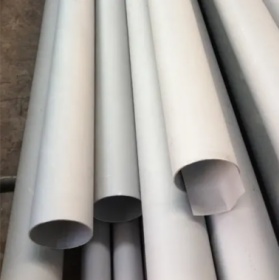
Industrial printing environments often involve moisture, solvents, inks, and temperature fluctuations.
TUV aerospace industry stainless steel tubes must resist:
Oxidation
Chloride corrosion
Chemical exposure
High-humidity degradation
Environmental Performance
Environment | Required Performance |
High Humidity | No surface rust |
Chemical Exposure | No pitting or cracking |
Temperature Cycles | No deformation |
Salt Fog | No corrosion after testing |
This ensures long-term stability in both aerospace and industrial printing operations.
Heat treatment processes improve mechanical stability and microstructure uniformity.
Key Processes
Process | Purpose |
Annealing | Enhances ductility |
Solution Treatment | Improves corrosion resistance |
Stress Relief | Prevents deformation |
For printing pad frameworks, this ensures tubes retain shape and alignment during long production cycles.
TUV aerospace industry stainless steel tubes must meet strict compliance and documentation requirements.
Required Documentation
Document | Purpose |
Mill Test Certificate | Verifies chemical composition |
Mechanical Test Report | Confirms strength properties |
Dimensional Inspection Report | Validates tolerances |
Heat Treatment Record | Confirms thermal processing |
This traceability ensures quality consistency and simplifies factory audits.
In industrial printing pad applications, stainless steel tubes are used for:
Structural reinforcement
Ink and solvent transport lines
Cooling channels
Mechanical support frameworks
Their rigidity, corrosion resistance, and dimensional accuracy ensure uninterrupted printing performance and reduced maintenance costs.
Selecting a supplier with aerospace-grade production capability ensures long-term reliability.
At ZheJiang GaoSheng Pipe Industry Co., LTD., we manufacture TUV aerospace industry stainless steel tubes tailored for industrial printing and high-precision manufacturing needs. Our tubes combine mechanical stability, corrosion resistance, and consistent dimensional accuracy, ensuring reliable performance in demanding environments.
We work closely with factory operators and system integrators to provide customized tubing solutions that improve system reliability, reduce downtime, and enhance production efficiency.
If you're looking to upgrade your industrial printing pad support systems or high-reliability tubing infrastructure, we welcome you to connect with us and explore tailored stainless steel tube solutions designed for long-term performance.
1. What makes TUV aerospace industry stainless steel tubes suitable for industrial printing systems?
Their strength, corrosion resistance, and tight tolerances ensure stable performance and long service life in printing pad and fluid transport systems.
2. Which stainless steel grade is best for printing pad support structures?
Grades 304 and 316 are commonly used due to their corrosion resistance and mechanical stability.
3. How important is surface finish in stainless steel tubing?
Surface finish affects fluid flow efficiency, corrosion resistance, and contamination prevention.
4. Do TUV aerospace industry stainless steel tubes require certification?
Yes, full traceability and compliance documentation ensure quality consistency and performance reliability.