
Views: 0 Author: Site Editor Publish Time: 2026-07-28 Origin: Site


While carbon steel dominates global pipe volume, stainless variants hold a critical fraction. They typically capture between 5% and 15% of the total seamless market depending on the research index. This specialized segment commands a massive portion of global capital expenditure. You should not treat a stainless steel seamless pipe as a default preference. It requires a calculated engineering and financial decision. Choosing the wrong material often leads to catastrophic failures in harsh environments or wasted project budgets in benign ones. We will transition from macro-market statistics to a concrete, bottom-of-funnel decision framework. You will learn how to evaluate material upgrades effectively. We will also help you shortlist suppliers for industrial pipe products based on verifiable standards and strict performance needs.
Stainless steel accounts for a specialized fraction of the global seamless pipe market, driven strictly by environments where carbon steel fails (high corrosion, extreme temperature, sanitary compliance).
The primary decision bottleneck is choosing between a stainless steel seamless pipe and a stainless steel welded pipe based on pressure ratings and total cost of ownership (TCO).
Procurement success hinges on evaluating a stainless steel pipe manufacturer based on verifiable traceability (PMI testing) and adherence to ASTM/ASME standards, rather than base material cost alone.
You might wonder why stainless seamless variants capture such a specific market slice. The answer lies in the stark contrast between pure production volume and high capital expenditure value. Carbon steel easily wins the tonnage war across global infrastructure. However, specialized alloys represent high-value investments. Facilities willingly pay a premium for these materials. They require absolute reliability in conditions where standard alloys degrade rapidly. Producing an extruded alloy without a seam demands intense energy, specialized piercing mills, and strict metallurgical control. This creates a high-barrier market segment. It yields lower overall tonnage but drives massive revenue share.
Specific industrial triggers force engineers to abandon carbon steel. They must specify seamless stainless materials to prevent system failures. We can categorize these adoption drivers into three core sectors:
Chemical Processing & Petrochemical: Facilities handle aggressive acids and high-chloride environments daily. These fluids induce severe chloride stress corrosion cracking in standard pipes. Seamless stainless alloys resist this localized attack. They keep hazardous fluids safely contained.
Offshore Oil & Gas: Deepwater platforms operate under punishing internal and external pressures. Engineers specify seamless designs to eliminate longitudinal seam vulnerabilities. A seam could split under extreme subsea pressure spikes.
Nuclear & Power Generation: Steam lines and cooling systems experience massive thermal cycling. Nuclear facilities demand thermal stability and a zero-tolerance policy for leakages. Seamless extrusion provides the homogeneous micro-structure required for these critical paths.
Market share growth connects directly to a strict compliance lens. Global safety and environmental regulations grow tighter every year. Agencies penalize leaks and infrastructure failures heavily. Consequently, companies invest in corrosion-resistant infrastructure upfront. They use these premium pipes to ensure long-term environmental compliance and protect worker safety. This regulatory push guarantees a steady demand for high-grade seamless solutions.
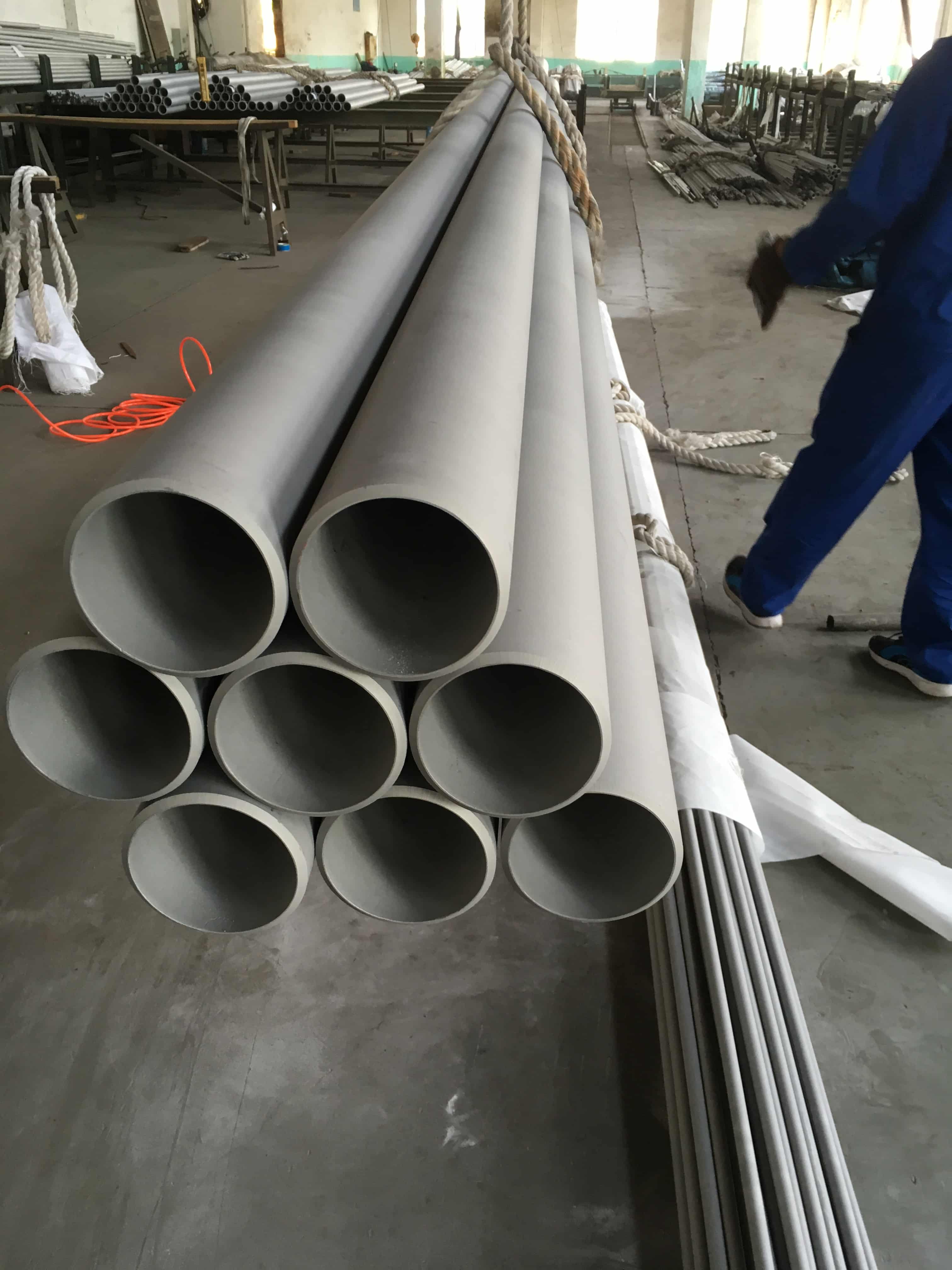
Choosing the correct pipe type dictates project safety and budget. You must evaluate a strict risk and reliability matrix before procurement. The seamless design entirely eliminates the weld-seam weak point. It offers the highest possible pressure ratings available for piping systems. Engineers mandate seamless configurations for critical-path applications under ASME codes. When a pipeline carries explosive gas or toxic chemicals, you cannot risk a seam failure.
Conversely, a stainless steel welded pipe serves an equally important role in modern industry. It generally offers a lower initial cost. Buyers also benefit from significantly faster lead times. Manufacturers form these pipes from rolled steel sheets. This method suits low-to-medium pressure applications perfectly. You will often see them in water treatment, decorative architecture, or structural supports. We recommend welded options when internal pressures remain well below the material's yield limits.
Implementation realities quickly complicate simple cost comparisons. Wall thickness constraints play a massive role in material selection. Seamless manufacturing processes, such as rotary piercing and extrusion, allow for exceptionally heavy walls. If your project requires Schedule 80, Schedule 160, or XXS dimensions, seamless becomes mandatory. Welded manufacturing struggles to roll and fuse extremely thick plates reliably. The structural integrity of a thick welded seam often degrades compared to an extruded solid billet.
Lead time variations also disrupt supply chain planning. You must acknowledge this reality early. Extruding solid billets takes specialized machinery. Only a limited number of global mills possess this capability. Therefore, seamless pipes often require much longer production cycles than welded variants. You should factor these extended timelines into your initial project schedule. Delays in material delivery can halt entire construction phases.
The chart below breaks down the technical differences between the two manufacturing styles.
Evaluation Metric | Seamless Pipe | Welded Pipe |
|---|---|---|
Structural Integrity | Homogeneous structure, no seam | Contains a longitudinal weld seam |
Pressure Capacity | Exceptional (Suitable for high pressure) | Moderate (Limited by weld joint efficiency) |
Wall Thickness | Available in heavy schedules (Sch 160, XXS) | Typically limited to lighter schedules |
Production Lead Time | Longer (Complex extrusion process) | Shorter (Faster roll-forming process) |
Typical Applications | Upstream Oil & Gas, Nuclear, High-Temp Steam | Water Treatment, Structural, Low-Pressure Lines |
Selecting the exact alloy grade forms the foundation of system reliability. You must match the metallurgical features to your specific operational outcomes. A generic approach leads to rapid corrosion or over-engineered waste. We evaluate grade selection strictly through performance metrics.
304/304L: This represents the baseline for corrosion resistance. It contains roughly 18% chromium and 8% nickel. It serves perfectly for standard industrial environments. You will find it in food processing, dairy, and mild chemical transport. The "L" denotes low carbon. This prevents carbide precipitation during installation welding.
316/316L: Engineers specify this grade for harsher environments. It includes a critical addition of molybdenum. This element specifically fights chloride stress corrosion cracking. You must use 316/316L in marine applications, offshore rigs, and aggressive chemical processing plants. It stands up to salts and industrial solvents effectively.
Duplex/Super Duplex (e.g., 2205, 2507): These advanced alloys feature a mixed microstructure. They combine austenite and ferrite phases. This yields a much higher strength-to-weight ratio than standard 300-series grades. Because they are stronger, you can design systems utilizing thinner pipe walls. This reduces the overall project weight significantly. Offshore platforms rely on Duplex to save weight while resisting aggressive pitting corrosion.
You must map these grades directly to your project specifications. Do not upgrade to a Duplex alloy if your system only transports treated water. Conversely, never downgrade to 304 in a coastal facility exposed to salt spray. Accurate specification ensures your pipelines perform safely throughout their intended design life.
Procurement teams face significant risks when sourcing heavy industrial materials. You cannot simply accept the lowest bid. You must vet your chosen stainless steel pipe manufacturer thoroughly. Traceability and certification serve as your primary defense against substandard materials. Procurement teams must demand specific documentation before approving any shipment.
First, mandate Mill Test Certificates (MTC) conforming to EN 10204 3.1 or 3.2. A 3.1 certificate means the manufacturer tested the batch internally. A 3.2 certificate requires an independent third-party inspector to verify the test results. Critical-path projects almost always require 3.2 certification. This proves the chemical composition and mechanical properties meet your exact specifications.
Second, implement Positive Material Identification (PMI). Grade mix-ups happen frequently in large distribution yards. Visually, a 304 pipe looks identical to a 316 pipe. A PMI scanner uses X-ray fluorescence to verify the elemental composition on the spot. This guarantees you received the molybdenum-rich alloy you paid for.
Third, verify their Non-Destructive Testing (NDT) capabilities. You need proof the pipes contain no hidden voids or micro-cracks. Reputable mills perform ultrasonic testing to find internal flaws. They also conduct hydrostatic testing to confirm the pipe can handle specified internal pressures without rupturing.
Scalability and supply chain risks also demand your attention. You must evaluate the manufacturer's raw material sourcing. Ask about their billet origin. Poor quality steel billets result in poor quality pipes, regardless of the extrusion method. Furthermore, assess their production capacity. Large-scale capital projects require hundreds of tons of material delivered on strict schedules. Review their historical adherence to promised delivery windows. A supplier who cannot scale production will delay your entire construction timeline.
Installation teams face unique mechanical realities when working with high-grade alloys. Thread galling represents a major risk during assembly. When workers thread two stainless components together, friction removes the protective oxide layer. The bare metals cold-weld together under pressure. The threads lock up entirely. Workers usually have to cut the jammed pipe away. You can mitigate this risk easily. Always apply specialized anti-seize lubricants to the threads. Furthermore, adhere strictly to specified torque ratings. Over-tightening guarantees thread failure.
Galvanic corrosion destroys systems silently. It occurs when you integrate stainless steel with dissimilar metals, like standard carbon steel. If an electrolyte, such as water, connects the two metals, the less noble metal acts as an anode. The carbon steel will rust at an accelerated rate. We warn engineers against improper integration. You must use proper isolation techniques. Install dielectric unions or isolation gaskets between dissimilar flanges. This breaks the electrical circuit and stops the corrosion process.
You need a strict shortlisting logic before moving to procurement. Do not request vague vendor quotes. First, verify the exact ASTM standard required for your application. For example, ASTM A312 covers seamless and straight-seam welded austenitic pipes intended for high-temperature service. Second, calculate your required pressure ratings using process data. Third, finalize the exact pipe schedules and outside diameters. Only then should you send your Request for Quotation (RFQ). Clear parameters prevent suppliers from bidding on substandard equivalents.
Strategic pipe procurement dictates the safety and longevity of industrial facilities. You must approach material selection with strict engineering discipline. Keep these actionable takeaways in mind for your next project:
Evaluate the specific threat: Understand exactly why carbon steel fails in your process environment before upgrading to higher alloys.
Match manufacturing to pressure: Reserve seamless variants for high-pressure, critical-path lines, and utilize welded variants for lower-pressure utility applications.
Demand absolute traceability: Never install piping without verifying EN 10204 3.1 or 3.2 Mill Test Certificates and performing PMI scanning.
Prevent galvanic failure: Always isolate dissimilar metals during installation to prevent rapid anodic deterioration.
While stainless seamless pipes make up a minority percentage of the total market, they remain the absolute baseline for high-risk industrial applications. We recommend auditing your current system's pressure and corrosion failure risks immediately. Identify your most vulnerable pipelines. Contact technical sales today for expert grade selection consulting, or request a detailed specifications catalog to secure your facility's infrastructure.
A: A seamless pipe typically costs 20% to 50% more than a welded equivalent. This gap fluctuates based on grade and wall thickness. Seamless extrusion requires complex machinery and higher energy consumption. Heavy-walled schedules increase the price gap further, as welded options become harder to manufacture at extreme thicknesses.
A: They handle moderate pressures well, but they cannot match seamless capabilities entirely. ASME codes apply a joint efficiency factor to welded pipes, effectively derating their allowable pressure. When systems cross into extreme high-pressure thresholds or handle highly toxic fluids, engineering codes mandate seamless pipes to eliminate seam rupture risks.
A: You must start with a thorough visual inspection for surface defects. Next, deploy Positive Material Identification (PMI) testing to confirm the exact alloy chemistry. Finally, cross-reference the heat numbers stamped on the physical pipes with the provided Mill Test Certificates (MTC) to guarantee full material traceability.