
Views: 0 Author: Site Editor Publish Time: 2026-07-25 Origin: Site


Functionally, a Stainless steel seamless pipe is a monolithic cold worked entirely lacking a longitudinal weld seam. Heavy industries rely on it heavily for high-pressure, highly corrosive, or critical-path fluid transfer. You cannot afford failures in these demanding environments. Selecting an incorrect manufacturing method brings severe consequences. A compromised welded joint can cause catastrophic system failures under extreme pressure. Conversely, over-specifying seamless materials for low-risk systems inflates procurement budgets needlessly. Engineers and procurement teams face a complex balancing act. They must carefully weigh structural integrity requirements against dimensional tolerances and strict regulatory compliance. You will soon learn the exact manufacturing mechanisms making these products superior for harsh conditions. We explore how to evaluate mechanical capabilities against welded alternatives. Furthermore, you will discover standard specifications and essential material grades. This knowledge optimizes your next engineering project.
Structural Integrity: The absence of a weld seam eliminates the Heat-Affected Zone (HAZ), offering an inherently higher pressure rating and uniform corrosion resistance.
Cost vs. Performance: Seamless pipe typically carries a higher upfront cost and longer lead times but reduces liability and maintenance in critical applications.
Standardization: Verification relies on strict adherence to standards like ASTM A312 for high-temperature and general corrosive service.
Material Precision: Material selection ranges from standard 304/316L to highly specialized grades like 317LN seamless tube for severe chemical environments.
Manufacturers create these vital components through a highly complex extrusion process. They start by heating a solid steel billet to extreme temperatures. A powerful piercing rod then pushes directly through the center of the heated billet. This intense action creates a hollow, thick-walled tube blank. Heavy machinery then rolls and stretches this hot blank continuously. The rolling process achieves the final desired outside diameter and wall thickness. You will notice this process completely avoids any welding procedures.
Avoiding the welding process completely eliminates the Heat-Affected Zone (HAZ). Traditional welding alters the local microstructure of the base metal. It often causes localized chromium depletion directly adjacent to the weld seam. This depletion creates specific metallurgical weaknesses. Harsh chemical applications exploit these weak points rapidly, leading to stress corrosion cracking. A true stainless steel seamless pipe prevents these localized failures entirely. It offers highly uniform corrosion resistance across its entire internal and external surface.
Production does not end immediately after physical extrusion. The raw metal must undergo solution annealing to relieve severe internal stresses. Annealing involves heating the material uniformly and then rapidly cooling it. This thermal step restores the optimum corrosion resistance lost during physical deformation. Finally, manufacturers pickle the surface. Pickling uses strong acid baths to remove surface impurities and residual oxidation scales. The resulting finished product delivers exceptional structural reliability for critical operations.
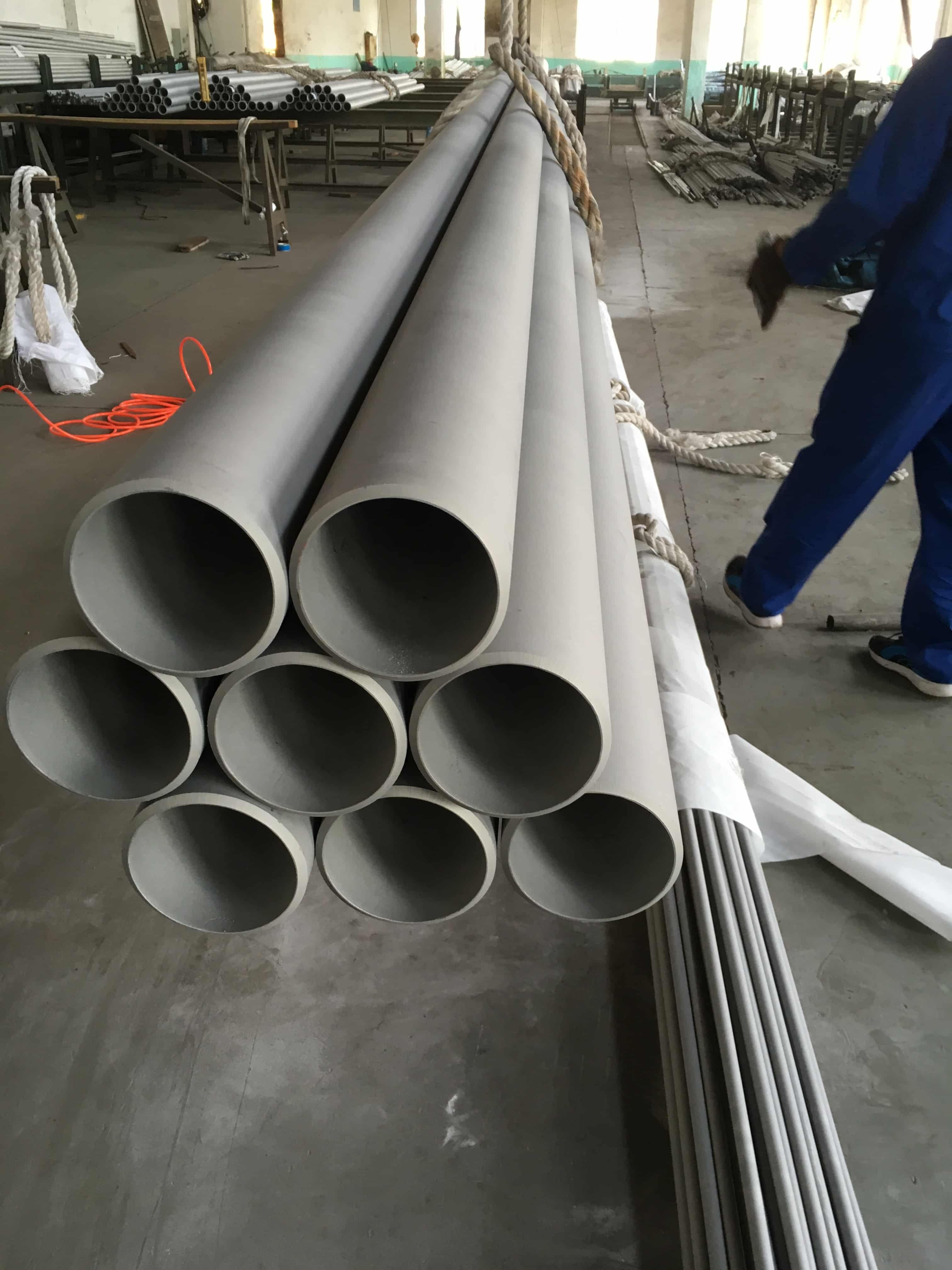
Engineers must choose between seamless and welded profiles carefully based on systemic demands. Pressure capabilities often dictate this primary choice. Seamless configurations generally offer a 20% higher working pressure threshold compared to equivalent welded counterparts. This multiplier provides a crucial safety margin in highly demanding applications. The solid perimeter distributes internal mechanical loads evenly without stressing a weak point.
However, you must acknowledge certain manufacturing trade-offs. The high-temperature extrusion process inherently produces wider wall thickness tolerances. You might find slightly less concentricity than you would with welded alternatives. Welded tubes form from precision-rolled strip steel. Strip steel offers highly consistent, tightly controlled thickness from the start. Manufacturers form it into a tube and weld it precisely. This modern approach makes welded products highly concentric.
Application alignment remains the most critical determining factor. You should specify seamless configurations exclusively when handling lethal fluids or high-pressure steam. Deep-water offshore extraction also demands solid extrusion to withstand immense external pressures. Furthermore, use them whenever internal visual inspection proves impossible over the system lifecycle. Conversely, we recommend opting for welded alternatives for low-pressure systems. Large-diameter commercial applications also benefit greatly from welded solutions. Highly cost-sensitive commercial projects often favor welded inventories due to volume pricing.
Feature | Seamless Pipe | Welded Pipe |
|---|---|---|
Pressure Rating | Typically 20% higher baseline capacity | Lower capacity due to longitudinal seam |
Concentricity | Moderate variations in wall thickness | Highly precise and uniform walls |
Primary Use Case | Lethal fluids, high pressure, offshore | Low pressure, large diameter transport |
Corrosion Resistance | Uniform protection throughout structure | Susceptible to localized pitting at the weld (HAZ) |
Procuring a reliable industrial seamless pipe requires strict adherence to international standardizations. Regulatory bodies define exact performance expectations for safety. For instance, an ASTM A312 seamless pipe must meet specific and rigorous mandates. This standard governs austenitic stainless steel intended for high-temperature and general corrosive service. The specification focuses heavily on tensile strength and yield strength limits. It also dictates precise heat treatment procedures. You cannot ignore these compliance metrics during procurement.
Understanding dimensional frameworks is equally vital for structural engineering. Engineers rely on Nominal Pipe Size (NPS) to define standard sizing globally. NPS relates directly to the internal Schedule system. Common schedules include SCH 10, SCH 40, and SCH 80. The schedule determines the exact wall thickness corresponding to a specific NPS. Higher schedule numbers indicate thicker walls. Thicker walls naturally handle much higher internal pressures safely. You must align your NPS and Schedule choices to match your systemic mechanical load requirements.
Verification ensures structural safety before final installation. Manufacturers must conduct Non-Destructive Testing (NDT) to confirm internal integrity without damaging the product. We advise mandating these specific testing procedures:
Hydrostatic Testing: Filling the closed system with liquid and pressurizing it to detect micro-leaks.
Ultrasonic Testing: Emitting high-frequency sound waves into the metal to uncover hidden internal flaws.
Eddy Current Testing: Using electromagnetic induction to find dangerous surface and sub-surface defects.
These tests guarantee you receive a mechanically flawless component. They prevent astronomically expensive system failures after installation.
Alloy selection determines long-term chemical resistance in the field. Most industrial facilities begin with baseline austenitic alloys. Grades 304 and 304L represent the most common global choices. They serve general manufacturing and food processing applications exceptionally well. When you face harsh marine environments, grade 316 and 316L become necessary. These specific alloys contain added molybdenum to actively resist chloride-induced corrosion.
Severe applications require highly specialized, high-performance solutions. Highly acidic environments degrade standard baseline alloys very rapidly. A 317LN seamless tube provides superior protection in these scenarios. This specific grade features notably low carbon content alongside deliberate nitrogen enhancement. The nitrogen significantly boosts structural yield strength. The enhanced chemical composition dramatically elevates pitting resistance. You will find it indispensable for highly acidic and high-chloride exposures. Pulp and paper processing relies heavily on it. Advanced chemical processing plants also mandate this specialized grade for reactor pipelines.
Finally, buyers must understand the strict distinction between pipes and tubes. People often use the terms interchangeably in casual conversation, but they differ significantly in engineering:
Pipe Designation: Measured primarily by nominal size (NPS) and Schedule. Used almost exclusively for bulk fluid transport.
Tube Designation: Measured by exact outside diameter (OD) and precise wall thickness. Used for demanding structural applications or sensitive instrumentation.
Clarifying this terminology internally prevents costly manufacturing and ordering mistakes.
Industrial metal sourcing carries inherent supply chain risks. Complex extrusion manufacturing takes considerable time to execute properly. Mills require specific raw billets and specialized heavy equipment scheduling. Consequently, supply chains face much longer lead times. You will usually wait much longer compared to ordering standard welded inventory. Additionally, mills frequently impose higher Minimum Order Quantities (MOQs). Welded products easily roll off continuous, fast-paced production lines. Extruded versions require deliberate, energy-intensive batch processing. You must forecast your project demands several months in advance.
Verifying Mill Test Reports (MTRs) effectively prevents counterfeit material acquisition. MTRs act as the official, traceable birth certificate for your metal. Unscrupulous secondary vendors sometimes falsify these crucial documents. Buyers must thoroughly authenticate several critical data points upon delivery. First, check the exact chemical composition breakdown. It must match your requested ASTM standard identically. Next, verify the printed heat numbers. The heat number on the paper documentation must physically match the stencil printed on the metal. Finally, confirm the mechanical property testing results. Check tensile strength, yield strength, and elongation percentages carefully. Taking these strict steps guarantees authentic, safe materials.
Robust long-term reliability heavily justifies the initial premium purchase price. You will notice these monolithic extrusions cost significantly more upfront. However, they drastically reduce unexpected plant downtime. Complex chemical pipelines demand frequent safety inspections and shutdowns. Removing the vulnerable weld seam lowers your mandatory inspection frequencies. Furthermore, monolithic structures boast a much longer lifecycle in highly corrosive environments. You spend far less capital on replacement components over a twenty-year operational span. This inherent reliability proves structurally invaluable for high-stakes industrial facilities.
Seamless stainless steel pipe stands as a non-negotiable requirement for critical infrastructure. You must utilize it in high-pressure and highly corrosive industrial environments safely. Welded alternatives simply cannot offer the same uniform structural integrity. Eliminating the heat-affected zone entirely provides unparalleled engineering peace of mind.
We strongly advise buyers to cross-reference their specific operational conditions carefully. Map your expected internal fluid pressures and harsh chemical exposures accurately. Compare those specific data points against standard ASTM A312 specifications. Budget constraints must ultimately align with your required safety factor margins.
Procurement and engineering teams should proactively submit detailed RFQs to certified mills. Ensure you specify the exact NPS, Schedule, and specific Material Grade required. Doing so guarantees highly accurate lead time projections and precise pricing evaluation for your next critical project.
A: Seamless pipes generally carry a 20% to 40% price premium over welded equivalents. This difference stems from the energy-intensive extrusion process and higher manufacturing complexity. Exact premiums fluctuate based on the specific outside diameter (OD), requested wall thickness, and current raw billet availability.
A: Yes. Engineers use Barlow’s formula to calculate bursting pressures. Seamless construction allows for a joint efficiency factor of 1.0, offering maximum pressure capability. Welded pipes require a penalty factor (usually 0.8 to 0.85) to account for inherent vulnerabilities at the weld seam, giving seamless a distinct safety advantage.
A: Always begin with a thorough visual inspection for surface defects. Next, strictly authenticate the Mill Test Reports (MTRs). Verify the chemical composition and mechanical properties match standard requirements. Finally, ensure the physical heat number and ASTM standard stenciled on the metal perfectly match your MTR documents.
A: Substituting welded for seamless introduces significant engineering risk. Thicker walls do increase burst pressure, but they do not negate the metallurgical vulnerability of the Heat-Affected Zone (HAZ). Strict industry codes often prohibit substituting welded pipes in lethal service or extreme high-pressure applications regardless of wall thickness.