
Views: 0 Author: Site Editor Publish Time: 2026-07-31 Origin: Site


Selecting the wrong industrial pipe carries massive consequences for your business. High stakes define modern fluid transport systems across every heavy sector. Material failures easily derail project budgets, trigger critical system shutdowns, and create severe regulatory compliance headaches.
Engineers constantly face a frustrating balancing act during procurement. You must weigh the distinct cost and availability advantages of welded pipes against the superior structural reliability of seamless options. Welded variants provide notable budget relief, yet they carry inherent vulnerabilities at the seam. Conversely, seamless tubes deliver exceptional pressure tolerance but command premium prices. Making the wrong choice impacts both safety and long-term project viability.
This guide delivers an objective, engineering-aligned framework to navigate this ongoing conflict. We will examine manufacturing differences, performance thresholds, and strict compliance criteria. You will discover actionable strategies to specify the exact material you need for your next installation.
Structural Integrity: Seamless pipes lack a weld seam, offering a 20% higher working pressure capacity under ASME standards.
Dimensional Accuracy: Welded pipes offer superior wall thickness uniformity and concentricity compared to seamless alternatives.
Cost & Availability: Welded pipes generally have a lower procurement cost and shorter lead times.
Material Specifics: When specifying stainless steel seamless pipe, the lack of a weld eliminates the primary zone for localized corrosion in aggressive chemical environments.
Manufacturers use radically different methods to produce these two pipe types. Understanding these base processes helps you predict their field performance accurately.
First, let us explore seamless manufacturing. Facilities typically rely on a process called billet extrusion. They start with a solid cylinder of steel, known as a billet. They heat this billet to extreme temperatures in an industrial furnace. During billet extrusion, the steel must reach an exact plasticity point. Next, a powerful piercing rod pushes directly through the hot center. This aggressive mechanical action forms a hollow tube. Workers then roll and stretch this hot tube to reach the desired final dimensions.
While this method creates a highly robust structure, it carries a notable physical limitation. The high-temperature extrusion process inherently produces slight natural variations in wall thickness. As the piercing mandrel pushes through the hot metal, it can drift slightly off-center. Physics dictates some minor deviation because the rod seeks the path of least resistance. This drift creates minor eccentricity in the final product.
Conversely, welded pipe manufacturing relies on precision forming and welding. Producers do not start with a solid block. Instead, they begin with flat steel plates or continuous coils, widely known as skelp. They roll this flat material into a uniform cylindrical shape using a series of heavy rollers.
Various welding techniques then secure the longitudinal seam. Many modern manufacturers produce highly reliable ERW stainless steel pipe using Electric Resistance Welding. In this advanced method, high-frequency electrical currents heat the steel edges. Massive pressure rollers then forge the molten edges together without using filler metal. Traditional fusion methods, like Submerged Arc Welding (SAW), also exist for much thicker materials. Modern mills often trim the excess weld flash from both the inside and outside. This trimming creates a remarkably smooth surface.
This welded process offers a massive structural advantage. Because it starts from a precisely milled flat sheet, it guarantees highly consistent wall thickness. You get excellent dimensional control across the entire pipe length.
Feature | Seamless Pipe | Welded Pipe |
|---|---|---|
Starting Material | Solid steel billet | Flat steel coil or plate (skelp) |
Wall Thickness | Subject to slight eccentricity | Highly uniform and consistent |
Weld Seam | None | Longitudinal or spiral seam present |
Size Availability | Limited outside diameters (OD) | Available in massive outside diameters |
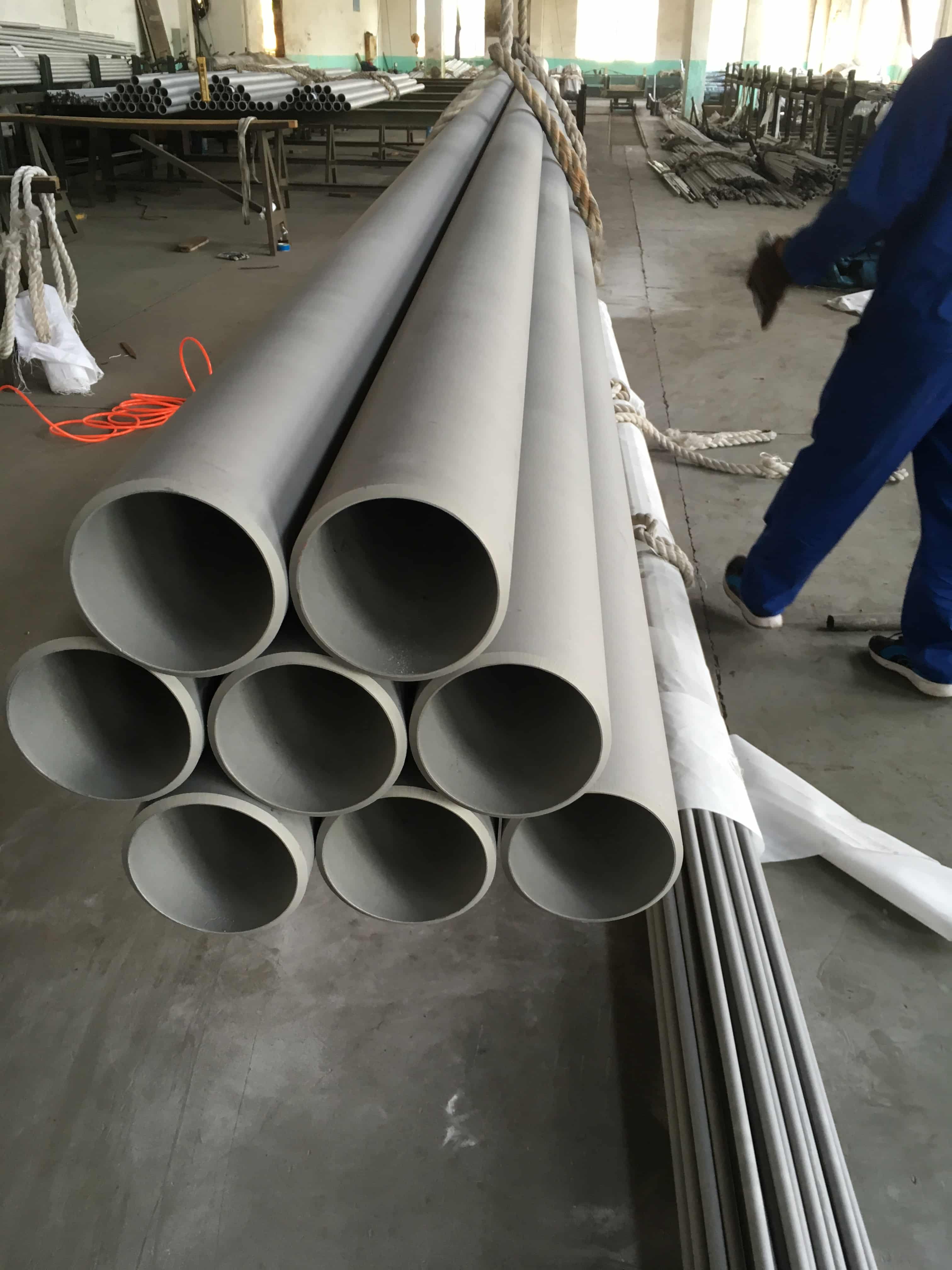
Pressure ratings heavily influence your final material selection. Strict engineering codes dictate these operational thresholds. ASME B31.3 governs process piping design across refineries and chemical plants. It assigns a specific joint efficiency factor to different manufacturing methods.
Seamless pipes earn a perfect joint efficiency factor of 1.0 under these codes. This perfect score means engineers can calculate pressure ratings using the full inherent strength of the base metal. They require no additional non-destructive examination (NDE) to prove joint integrity. Consequently, engineers confidently rate them for much higher internal pressures.
Many buyers hold a common but incorrect misconception. They assume seamless pipes always offer perfect, flawless dimensions. We must debunk this myth immediately. As discussed earlier, seamless tubes often suffer from slight eccentricity due to the hot piercing mandrel.
In contrast, welded pipes provide vastly superior wall uniformity. Their near-perfect concentricity makes them substantially easier to align during field installation. Welders can fit them together much faster. This tight tolerance drastically reduces preparation time and labor costs on the job site.
Fatigue and cyclic loading present another critical engineering challenge. Industrial systems often experience intense vibration and constant pressure fluctuations. Seamless pipes excel remarkably under these dynamic conditions. They completely lack a heat-affected zone (HAZ) running down their length. The absence of this localized microstructural weak point provides much better long-term resistance to cyclic fatigue and mechanical vibration.
Material selection plays a massive role in combating industrial corrosion. When corrosive fluid travels through a stainless steel welded pipe, the longitudinal weld seam acts as a potential vulnerability. The intense welding heat alters the microscopic grain boundaries. Carbon precipitates out of the alloy and binds with chromium. This chemical reaction creates chromium-depleted zones right next to the weld.
If manufacturers fail to properly anneal the seam, it invites severe intergranular corrosion. Aggressive chemicals attack this microscopic boundary, leading to rapid material degradation. The metal literally rots from the inside out along the weld line.
Because of this localized risk, seamless models remain the default standard for severe, high-risk environments. Offshore drilling platforms strictly mandate their use. Chemical processing plants heavily rely on their uniform grain structure to handle volatile acids. Sanitary and pharmaceutical manufacturing applications also demand this seamless purity to prevent bacterial buildup in microscopic weld crevices.
Heat treatment realities heavily complicate welded options. Producers must apply rigorous post-weld heat treatment to mitigate corrosion risks. They must normalize the altered grain structure across the entire heat-affected zone. This critical extra step helps welded stainless pipes match the baseline metallurgical properties of a seamless equivalent. Without proper heat treatment, the welded pipe will fail prematurely in corrosive service. Buyers must always verify these heat treatment records before installation.
Procurement teams must carefully analyze all upfront financial costs. Seamless manufacturing requires highly intensive energy consumption and extremely specialized piercing machinery. This complex mechanical process naturally drives up the initial purchase price.
However, you must actively compare this against stringent certification expenses. Welded pipes typically cost much less to manufacture. Yet, if you plan to use them in high-pressure systems, engineering codes mandate rigorous safety testing. You must pay for expensive non-destructive testing (NDE) methods.
Common requirements include complete X-ray inspections or ultrasonic testing of the entire weld seam. If you skip this validation, ASME codes force you to reduce the allowable operating pressure. These mandatory regulatory tests and mathematical penalties can quickly offset your initial material savings.
Supply chain limitations also strictly dictate your available choices. Steel mills find it notoriously difficult to produce seamless pipes in very large outside diameters (ODs). Extruding massive steel billets requires excessively large, prohibitively expensive equipment.
Therefore, large-diameter infrastructure projects almost exclusively rely on welded pipe. You simply cannot source massive seamless tubes economically. Welded production scales up easily and efficiently. Manufacturers just use wider flat steel plates. This practical reality forces large water lines and cross-country transport systems toward welded solutions.
You should firmly choose seamless designs for high-pressure, high-temperature (HPHT) environments. The solid, uniform construction handles thermal expansion and extreme mechanical stress reliably.
We see several specific, highly critical seamless pipe applications across heavy industry:
Upstream oil and gas extraction facilities and offshore platforms.
Aggressive chemical and petrochemical processing units.
High-pressure hydraulic cylinders and heavy lifting machinery.
Superheated boiler tubes and critical power generation components.
Specify seamless whenever a catastrophic failure carries severe safety or environmental risks. If a pipeline blowout could cause massive harm, you should never compromise on the joint efficiency factor.
Welded variants perfectly suit low-to-medium pressure industrial systems. The substantial financial savings make absolute sense here.
You should specify welded pipes for:
Architectural and structural support applications.
Municipal water distribution and treatment networks.
Low-corrosive fluid transport lines and exhaust systems.
Low-pressure steam piping and HVAC chiller lines.
You must choose welded models for any projects requiring extra-large diameter pipes. Furthermore, tight budget constraints or rushed project schedules often necessitate welded selections. Their rapid availability and lower base cost keep demanding projects on track.
The choice between these two structural options is rarely about which is objectively better. Instead, it involves expertly aligning fundamental material properties with your specific project parameters. You must critically evaluate pressure requirements, assess environmental risks, and manage your budget constraints.
Take these actionable next steps before finalizing your material purchase:
Consult your project's exact ASME code requirements to verify mandatory joint efficiency factors.
Rigorously review all material test reports (MTRs) to confirm chemical compositions and heat treatments.
Calculate the true cost of non-destructive testing if you plan to use welded pipes for high-pressure applications.
Contact a specialized procurement engineer to request a customized material quote tailored to your operational thresholds.
Thorough preparation guarantees a safer, more reliable industrial piping system that performs exactly as designed.
A: Yes, but only if the operating pressure falls within the code allowance for welded pipe. You must also ensure appropriate non-destructive testing, like X-ray examination, confirms the weld integrity. If it meets these strict engineering parameters, replacement is highly viable.
A: No. ERW creates a weld seam via electrical resistance. Modern manufacturing can make this seam nearly invisible, but it is still legally and structurally classified as welded. It carries a different joint efficiency factor under standard engineering codes.
A: The piercing of a hot solid billet naturally allows the mandrel to drift slightly. This mechanical wandering leads to eccentric wall thickness. In contrast, welded pipe is rolled from precisely milled flat steel sheets, ensuring excellent dimensional uniformity.