
Views: 193 Author: Site Editor Publish Time: 2025-11-28 Origin: Site


Changing Global Dynamics Impacting Stainless Steel Welded Pipe Procurement
Key Technical and Quality Requirements Buyers Must Prioritize in 2026
Strategic Supplier Selection Models for Stainless Steel Welded Pipe
Risk Management Across Global Stainless Steel Welded Pipe Supply Chains
The sourcing landscape for stainless steel welded pipe is evolving rapidly as global trade dynamics, environmental regulation, cost structures, and supply chain resilience become increasingly critical in 2026. Buyers who previously relied on stable commodity prices and predictable logistics now face fluctuating raw material costs, regional protectionism, stricter product certification requirements, and transformative digital procurement technology. To achieve competitive advantage, procurement leaders must shift from transactional buying to strategic sourcing—building supplier partnerships, measuring total lifecycle value, leveraging digital intelligence, and aligning sourcing decisions with corporate sustainability and risk goals.
In 2026, global sourcing of stainless steel welded pipe is shaped by political, economic, and environmental factors that materially affect material pricing, logistics stability, and supplier availability. Buyers can no longer assume that the lowest-cost region automatically delivers the optimal sourcing outcome. Trade policies, regional energy pricing, raw material access, and labor market conditions determine cost competitiveness, while transportation bottlenecks influence lead times and order planning.
Raw material price volatility remains a critical factor, especially for nickel and chromium—key alloying elements in stainless steel. Freight rates have also become less predictable due to geopolitical tensions and shifting port regulations. Meanwhile, regional carbon taxation and energy intensity restrictions impact producers with high emissions footprints, favoring mills that have invested in clean energy and recycling-based melt shops. For buyers of stainless steel welded pipe, this means sourcing strategies must incorporate scenario planning, multipolar supply networks, and alternative supply considerations rather than relying solely on centralized procurement.
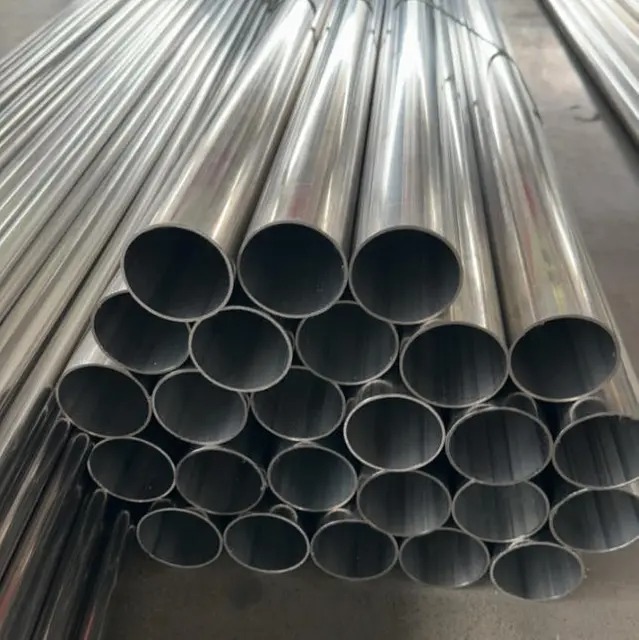
Ensuring technical performance and quality assurance has always mattered, but in 2026, the scrutiny placed on stainless steel welded pipe performance has intensified due to increased regulations, safety expectations, and lifetime operational cost evaluation. Buyers must ensure that sourcing decisions align with expected application environments, ranging from petrochemical process pipelines and structural frameworks to slurry transport and high-temperature refinery lines. Manufacturers must demonstrate consistent weld seam integrity, tight dimensional tolerance, and surface finishing quality to minimize post-processing.
| Inspection Area | Critical Requirements |
|---|---|
| Raw Material Grade | ASTM / EN grade validation, alloy certification |
| Weld Quality | X-ray or ultrasonic weld testing, seam smoothness, integrity |
| Corrosion Resistance | Pitting resistance equivalent number (PREN), process suitability |
| Heat Treatment | Verified annealing to stabilize structure and stress |
| Dimensional Accuracy | OD, wall thickness, length uniformity |
| Surface Finish | Pickling, passivation, mill finish, mechanical polish |
In 2026, buyers should prioritize mills with automated forming, laser or TIG welding automation, and advanced non-destructive testing capabilities, which reduce the risk of seam failures and variability in final product quality. Audit checklists should include production traceability, heat number tracking, material chemistry documentation, and weld procedure specifications. Technical due diligence ensures that suppliers deliver consistent, specification-compliant stainless steel welded pipe that performs reliably throughout its lifecycle.
Supplier evaluation in 2026 must move beyond unit price comparisons and incorporate capacity, reliability, technical capability, automation maturity, ESG performance, and production transparency. Strategic sourcing models help procurement organizations select suppliers that reduce long-term volatility and improve operational outcomes.
| Evaluation Dimension | Selection Focus |
|---|---|
| Technical Capability | Welding technology, automated inspection, certifications |
| Capacity & Stability | Mill capacity, backlog level, production lead time stability |
| Pricing Competitiveness | Indexed pricing, transparency, long-term contract options |
| ESG & Regulation | Carbon footprint, waste management, energy sourcing |
| Data Transparency | Digital reporting, track-and-trace, statistical process control |
Buyers should segment suppliers into strategic partners, development suppliers, and transactional providers. Strategic partners should be engaged early in design, drawing review, and cost optimization. Competitive bidding remains important, but long-term framework agreements and dual-sourcing models can limit exposure to region-specific disruptions. Supplier relationship management (SRM) strategies—joint development programs, quarterly business reviews, and co-innovation—create durable mutual advantage.
In 2026, sourcing excellence for stainless steel welded pipe is not defined solely by unit pricing but by optimizing the total cost of ownership (TCO). Procurement leaders must analyze upstream and downstream cost drivers including logistics, storage, field installation costs, post-delivery rework, warranty claims, and lifecycle maintenance.
Raw material index variability
Freight and customs duties
On-site handling and compatibility
Requirement for additional surface treatments or end finishing
Scrap, wastage, or re-processing
Supplier productivity and schedule deviation risks
Buyers can implement TCO optimization methods including consolidated shipments, harmonized procurement specifications to avoid unnecessary alloy upgrades, vendor-managed inventory (VMI), and predictive maintenance evaluation to ensure material selection matches operational lifetime expectations. Cost modeling based on actual historical consumption data can provide procurement leverage, enabling fact-based negotiations with suppliers in 2026.
ESG expectations are significantly redefining stainless steel welded pipe procurement. Global buyers face regulatory obligations including supply chain carbon reporting, end-use emissions accounting, waste management certification, and recycled content disclosures. Procurement decisions increasingly consider lifecycle impact and environmental footprint alongside technical performance and financial competitiveness.
Percentage of recycled scrap in raw material
Energy source mix—renewable share vs traditional fossil fuels
Emission intensity per ton of output
Waste acid treatment and recovery systems
ISO 14001 and environmental audit compliance
Social and labor responsibility standards
Companies with high ESG ratings increasingly prefer mills that rely on electric arc furnace production, lower emissions processes, and closed-loop pickling acid recycling. For buyers, sustainability is no longer a “soft factor” but a quantifiable decision variable influencing customer perception, project approval, and regulatory compliance. Incorporating ESG scorecards into supplier selection ensures that sourcing strategies align with 2026 corporate sustainability mandates and market expectations.
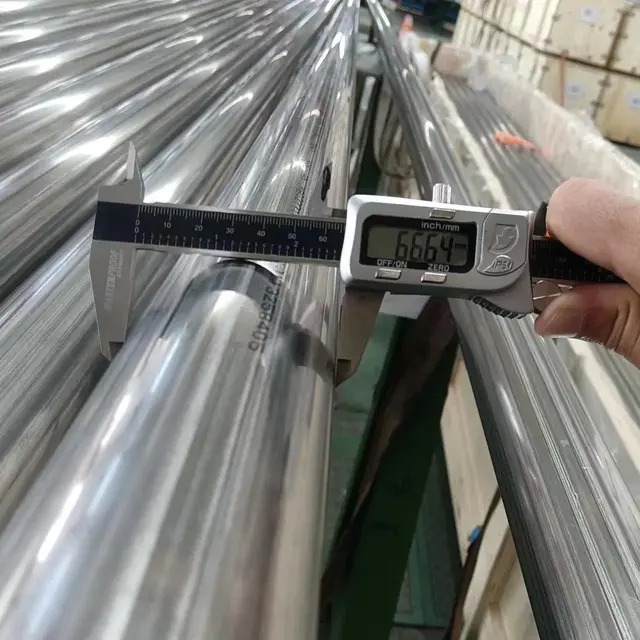
Supply chain risk has emerged as a board-level concern, and stainless steel welded pipe procurement is no exception. Disruptions—including shipping constraints, regional diplomatic tensions, natural disaster exposure, and raw material shortages—can cause major production and delivery delays. In 2026, leading procurement organizations are implementing structured risk control frameworks with diversified sources, digital monitoring, and contingency contracts.
Effective risk mitigation includes multi-geographic sourcing portfolios balancing Asia, Europe, Middle East, and Americas production bases. Maintaining safety stock at critical project stages, pre-qualifying secondary mills, integrating supplier performance dashboards, and establishing clear escalation protocols enable buyers to reduce vulnerability to single-point failures. Additionally, factoring force majeure clauses and shipment rerouting options into contracts enhances agility. Risk management has evolved from periodic review to continuous monitoring supported by real-time supply chain visibility and predictive analytics.
Procurement digitalization is accelerating rapidly in 2026, reshaping how stainless steel welded pipe transactions are planned, executed, and analyzed. Advanced procurement systems integrate supplier performance tracking, pricing models, consumption forecasting, and automated RFQ workflows. Buyers can evaluate historical cost trends, compare mill efficiencies, and model sourcing strategies with greater accuracy than traditional manual processes allowed.
Digital platforms not only increase productivity but also enhance sourcing precision. Predictive analytics can forecast alloy price trends, simulate end-user consumption, and recommend optimal order timing. Smart contracts with automated milestone validation reduce paperwork, while supply chain IoT connectivity enables real-time traceability from melt shop to delivery. Procurement organizations that invest in digital tools gain competitive advantage through lower working capital requirements, sharper negotiation insights, and faster sourcing cycle times. In 2026, digital transformation is no longer a differentiator—it is becoming fundamental to sustainable procurement excellence.
The strategic sourcing landscape for stainless steel welded pipe in 2026 demands a rigorous, future-focused approach grounded in technical validation, multi-factor supplier selection, ESG alignment, total cost optimization, risk diversification, and digital-enabled decision-making. Buyers who embrace data transparency, robust supplier partnerships, and continuous supply chain scenario planning are best positioned to reduce volatility, maintain material reliability, and achieve measurable business value. Commodity buying models are giving way to integrated sourcing strategies that enhance resilience, performance, and sustainability across the entire procurement lifecycle. Success in 2026 depends not on finding the cheapest supplier but identifying the supplier ecosystem that creates the greatest total operational advantage.
1. Why is stainless steel welded pipe sourcing more complex in 2026?
Because buyers must navigate raw material cost volatility, ESG pressure, supply chain disruptions, and advanced technical requirements, making sourcing a strategic rather than transactional activity.
2. How should buyers evaluate suppliers effectively?
By assessing technical capability, automation level, ESG alignment, pricing transparency, reliability, digital data reporting, and long-term partnership potential—not just unit cost.
3. Why is ESG increasing in importance in procurement?
Regulations, customer expectations, and corporate sustainability targets require traceable environmental impact reporting across the stainless steel welded pipe supply chain.
4. Which digital tools are shaping procurement transformation?
Predictive analytics, e-procurement platforms, supplier dashboards, IoT tracking, and automated contract management systems are improving visibility and decision accuracy.
5. What is the biggest sourcing risk to prepare for in 2026?
Dependence on single-region suppliers or narrow supply bases—diversification, monitoring, and contingency planning are critical to reduce exposure.