
Views: 252 Author: Site Editor Publish Time: 2025-11-21 Origin: Site


Procuring Stainless Steel Pipe in bulk is a mission-critical supply task for industries dealing with construction, chemical processing, oil and gas, water transportation, manufacturing equipment, and structural fabrication. The decision affects not only cost but long-term operational reliability, maintenance budgets, safety compliance, and system performance. Bulk orders amplify both risks and rewards, making it essential to evaluate technical specifications, supplier capability, material traceability, legal standards, shipment conditions, and pricing logic with maximum precision.
A well-structured procurement approach provides assurance that every Stainless Steel Pipe delivered meets the environmental conditions, pressure loads, and durability expectations defined by its application. This article explores the essential considerations that buyers, engineers, and procurement managers must methodically assess before placing a bulk order to ensure optimal return on investment and minimal operational disruptions.
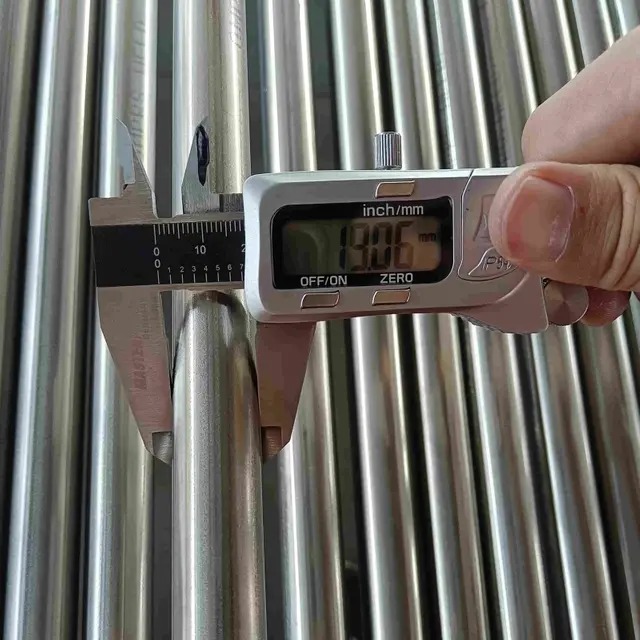
Bulk procurement of Stainless Steel Pipe is not a simple purchasing decision but a strategic supply chain activity that influences production reliability, stock stability, and long-term asset performance. Companies buying large volumes face higher accountability because any error in grade selection, inspection standards, or shipment coordination could escalate into major system failures. Therefore, buyers must evaluate usage environment, corrosion exposure, fluid characteristics, welding compatibility, expected mechanical loads, and inspection routines before submitting purchase specifications.
Industrial buyers that routinely require Stainless Steel Pipe benefit from establishing pre-qualified supplier networks, pre-approved quality benchmarks, and replenishment triggers tied to real consumption data. This reduces stock-outs, purchasing overheads, and emergency premiums. For industries such as oil and gas, marine operations, and chemical processing, having a stable bulk supply partner ensures production lines remain active and compliant with regulatory inspections. In summary, bulk procurement must support operational continuity, minimize downtime risk, and provide assurance that material consistency remains stable across shipments.
Selecting the proper grade of Stainless Steel Pipe is central to achieving long service life and structural integrity. Different grades offer unique mechanical properties, corrosion resistance levels, and temperature tolerance. An incorrect grade selection may cause premature system failures, corrosion damage, or pressure leaks under harsh conditions. Grade selection must therefore match the real operating environment rather than relying on generic industrial assumptions.
Below is a comparison illustrating how common Stainless Steel Pipe grades serve different industrial needs:
| Stainless Steel Grade | Key Characteristics | Suitable Applications |
|---|---|---|
| 304 | Moderate corrosion resistance, cost-efficient, versatile | Food processing, mild atmospheric environments |
| 316 | Enhanced corrosion resistance due to molybdenum | Marine, chemical exposure, saltwater pipelines |
| 321 | Titanium-stabilized, suited for high-temperature service | Exhaust systems, heat exchangers |
| 904L | High nickel and molybdenum content, premium corrosion resistance | Offshore platforms, acidic fluid transfer |
| Duplex 2205 | High strength and pitting resistance | Oil & gas, pressure vessels |
Material selection should also account for weldability, machinability, abrasive exposure, chlorides, fluctuating mechanical loads, and temperature variations. For large-scale procurement, buyers must secure mill material certificates (MTC) that confirm chemical composition and mechanical test results to guarantee that the ordered grade precisely matches production specifications.
A Stainless Steel Pipe may appear identical across suppliers, but only rigorous certification can verify that it meets engineering and safety expectations. In bulk procurement, compliance protects installations from legal disputes, audit failures, and catastrophic material performance issues. Every supplier must therefore demonstrate certification alignment with globally recognized standards applicable to steel manufacturing, pressure classes, and corrosion resistance.
Common standards influencing Stainless Steel Pipe procurement include:
| Standard | Region | Application Scope |
|---|---|---|
| ASTM (e.g., ASTM A312) | United States | Chemical composition, mechanical properties, manufacturing specifications |
| ASME | Global | Pressure systems, boilers, piping |
| EN | Europe | Dimensional and material conformity |
| ISO | Global | Quality management and procedural control |
Beyond material standards, buyers should confirm details such as:
Heat number traceability
Third-party inspection records
Ultrasonic and hydrostatic test results
Dimensional tolerance reports
Packaging standards to prevent transport damage
Compliance review reduces the risk of hidden material defects and proves that the Stainless Steel Pipe delivered aligns with project code requirements, especially for regulated sectors like petroleum, pharmaceuticals, and nuclear energy.
Bulk procurement is only as strong as the reliability of the supplier chosen to fulfill recurring orders. A strong Stainless Steel Pipe supplier should demonstrate financial stability, consistent manufacturing capacity, long-term export records, and certified international compliance. Procurement teams must therefore assess capability beyond initial quotations. If a supplier cannot maintain stable monthly output or source high-purity raw materials, delays and batch inconsistencies may affect project timelines.
Supplier evaluation should include:
Factory audits
Review of past customer references
Export country history
Turnaround time metrics
Quality management system audits
Level of after-sales technical communication
Long-term partnerships require clarity on pricing stability, delivery consistency, dispute handling, and transparent communication. An experienced supplier should also provide in-depth material selection guidance, application matching advice, and immediate feedback on manufacturing limitations. These capabilities reduce project engineering workload and enhance confidence in each bulk shipment.
Price per ton or per Stainless Steel Pipe length may dominate purchasing discussions, yet a strategic buyer considers total cost of ownership. Stainless steel pricing fluctuates based on raw nickel markets, global steel output, currency variations, and seasonal supply disruptions. As a result, basing purchase decisions purely on upfront cost can result in higher future expenses from increased maintenance, shortened service life, or replacement shutdowns.
Total cost evaluation must include:
Base material cost
Freight and insurance
Customs duty or import tariff
Packaging type and protective measures
Quality control labor on arrival
Expected service life versus cheaper alternatives
Waste percentage from machining and cutting
On-site storage protection requirements
Procurement teams should also review pricing models offered by suppliers such as:
Bulk discount tiers
Fixed-price supply contracts
Quarterly price review agreements
Hedging based on nickel futures
Contracting structures can minimize long-term exposure to steel market volatility. Companies conducting continuous industrial operations benefit from negotiating fixed minimum stock availability or consignment stock arrangements to prevent disruption during peak demand periods.
Logistics form a major part of bulk Stainless Steel Pipe procurement. Large cargo volumes require careful planning related to packing durability, moisture protection, customs documentation, container loading, and route scheduling. Delays in shipment timing can jeopardize entire projects, especially when the stainless steel required is not readily replaceable in domestic markets.
Bulk orders often rely on sea freight, prompting buyers to evaluate:
Port congestion risks
Seasonal typhoon or storm delays
Customs clearance duration
Transshipment requirements
Packaging designed to withstand corrosion, vibration, and impact
Lead time must also include the production cycle. Complex grades, large diameters, or customized surface finishes may require longer furnace time, hot forming, annealing, pickling, or polishing. Buyers should therefore request detailed timelines that account for both manufacturing and international logistics. Establishing tracking updates, insurance coverage, and contingency shipping routes is essential for mission-critical supply stability.
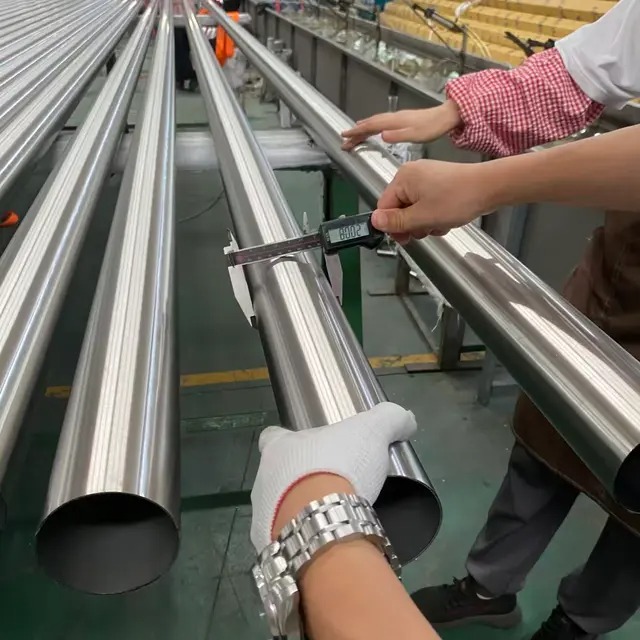
Stainless Steel Pipe performance is strongly influenced by dimensional accuracy, wall thickness consistency, and surface treatment. In bulk procurement, these details must be precisely defined in the purchase specification to avoid receiving material unsuitable for high-pressure welding, mechanical polishing, or sanitary systems. Dimensional tolerances affect both installation fit and flow stability in process pipelines, while surface defects may harbor corrosion initiation points or bacterial accumulation in food-grade installations.
Key specification considerations include:
Outer diameter tolerance
Wall thickness accuracy
Ovality limitations
Straightness deviation
Roughness value (Ra) for polished pipes
Pickled versus polished finish
Welded or seamless manufacturing route
Applications such as pharmaceutical production, semiconductor manufacturing, or brewing operations demand exceptionally clean pipe interiors, increasing inspection requirements and polishing grades. Structural applications may allow more lenient finish standards yet require stronger emphasis on load-bearing consistency. Defining these details prior to production prevents misunderstandings and minimizes rework costs after shipment delivery.
Bulk procurement of Stainless Steel Pipe is a complex process that demands a structured evaluation of technical requirements, supplier stability, compliance documentation, pricing volatility, manufacturing precision, and logistical preparedness. When executed properly, bulk purchasing ensures consistent production quality, stable inventory, lower purchasing overheads, and stronger system durability across industrial installations. A disciplined procurement framework involving detailed specifications, documentation verification, and supply chain planning protects project timelines and reinforces long-term operational reliability without exposing organizations to hidden financial or compliance risks.
1. Why is grade selection critical when ordering Stainless Steel Pipe in bulk?
Different grades offer distinct corrosion resistance, mechanical strength, and temperature tolerance. Selecting the correct grade ensures long service life, reduced maintenance, and system safety.
2. What documents should accompany bulk Stainless Steel Pipe shipments?
Buyers should request material test certificates, heat number traceability, dimensional inspections, and compliance documents aligned with ASTM or EN standards.
3. Is seamless pipe always better than welded pipe?
Not necessarily. Seamless pipes support higher pressure and demanding applications, while welded pipes offer excellent performance for most uses at lower cost. The correct choice depends on the operating conditions.
4. What logistics risks should buyers anticipate when importing bulk shipments?
Seasonal weather disruptions, port congestion, customs delays, container damage, and moisture exposure can all affect delivery timelines and material quality.
5. How can buyers stabilize pricing for Stainless Steel Pipe?
Options include long-term contracts, bulk volume agreements, or pricing mechanisms linked to nickel or stainless steel commodity indexes to reduce market volatility.